
👉 한국어는 첨부파일 에서 상세하게 확인 할 수 있습니다.
Finding a home in Korea can feel overwhelming due to language barriers and unfamiliar real estate systems. To help international students and residents protect their deposit money and visa status, here is our essential K-housing survival guide!
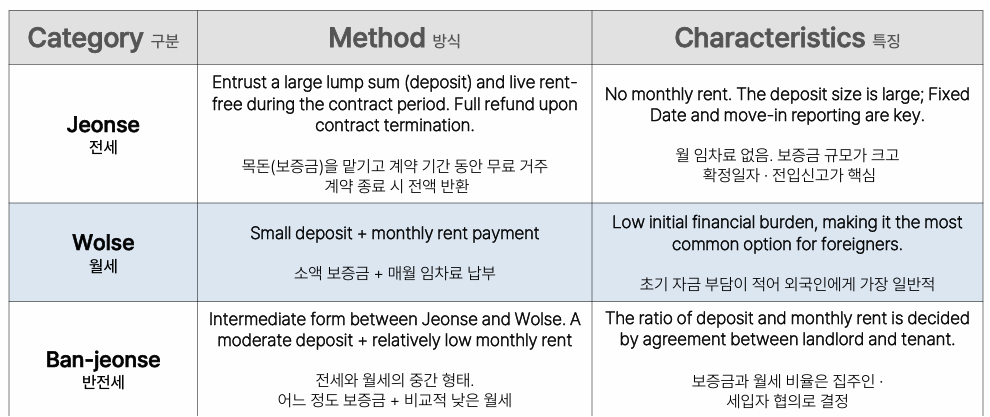
1. Jeonse vs. Wolse vs. Ban-jeonse & Essential Contract Rules
2. Must-Check Before Signing: Reading the Real Estate Register (등기부등본)
On your contract day, inspect the latest Certified Copy of Real Estate Register issued directly from the Supreme Court Internet Registry (https://www.iros.go.kr/index.jsp).
Cover Section (표제부): Verify that the property address, floor, and unit number match your contract exactly.
Section A / Gap-gu (소유권 - Ownership): Confirm that the registered owner's name matches the landlord's ID card at the contract table 100%.
Section B / Eul-gu (소유권 이외의 권리 - Mortgages): Check for existing bank loans (mortgages), attachments, or provisional injunctions.
💡 Golden Rule of Safety : If the sum of prior bank loans and your deposit exceeds 70% to 80% of the property's market value, avoid signing the contract. This indicates a high risk of losing your deposit if the property goes to auction.
3. Move-In Day Tasks & 4 Scam Prevention Rules
Mandatory Administrative Tasks on Move-In Day
Fixed Date & Housing Lease Reporting: Visit your local Community Center (주민센터) with your original lease contract to get a Fixed Date stamp. This grants you a legal Priority Repayment Right to safeguard your deposit.
Address Change Reporting (Within 14 Days): Under the Immigration Control Act, you must report your new address within 14 days of moving in.
⚠️ Penalty Warning: Late reporting results in a fine of up to 1,000,000 KRW. It also causes point deductions or visa rejection during D-2/D-10 extensions or E-7 visa status conversions.
Pro Tip: You can complete both your Fixed Date and Address Change simultaneously at the same Community Center counter.
4 Golden Rules for Scam Prevention
Take Photos & Videos on Day 1 : Document any existing damage or room conditions upon moving in and send them to your landlord immediately to prevent unfair deposit deductions when moving out.
Specify Maintenance Fee Items : Detail all included utility items (water, electricity, gas, internet, cleaning fees) clearly in the contract terms.
Never Transfer Money to Third Parties : Always transfer your deposit and rent directly to the bank account of the registered property owner listed on the Real Estate Register.
Transact via Registered Realtors : Avoid unverified SNS direct deals or unlicensed brokers. Work exclusively with government-registered real estate agents for full legal protection.
Finding a home in Korea may seem daunting at first, but by following these key steps, international residents can also safely and confidently secure a great place to live. 🏡
If you have any questions or need further clarification about renting in Korea, feel free to leave a comment below anytime! Vijob is always here to support your safe and happy journey in Korea. 💙