Loading page...

Loading...
Search Korean universities and programs by major, region, tuition, scholarships, and language. Well-organized information leads to better decisions.



How It Works
You discover. We handle the rest. Three steps to your admission.
Found some universities you like? Fill out a quick form with your major, budget, and language preferences.
~5 minOur advisors analyze your profile and send a tailored list of universities with scholarship, admission, and living cost details.
1–2 business daysFrom document prep to application submission to visa issuance — we walk with you until you get your acceptance letter.
Until acceptanceStudy Desk

GKS vs university scholarships — eligibility, amounts, and application strategy.
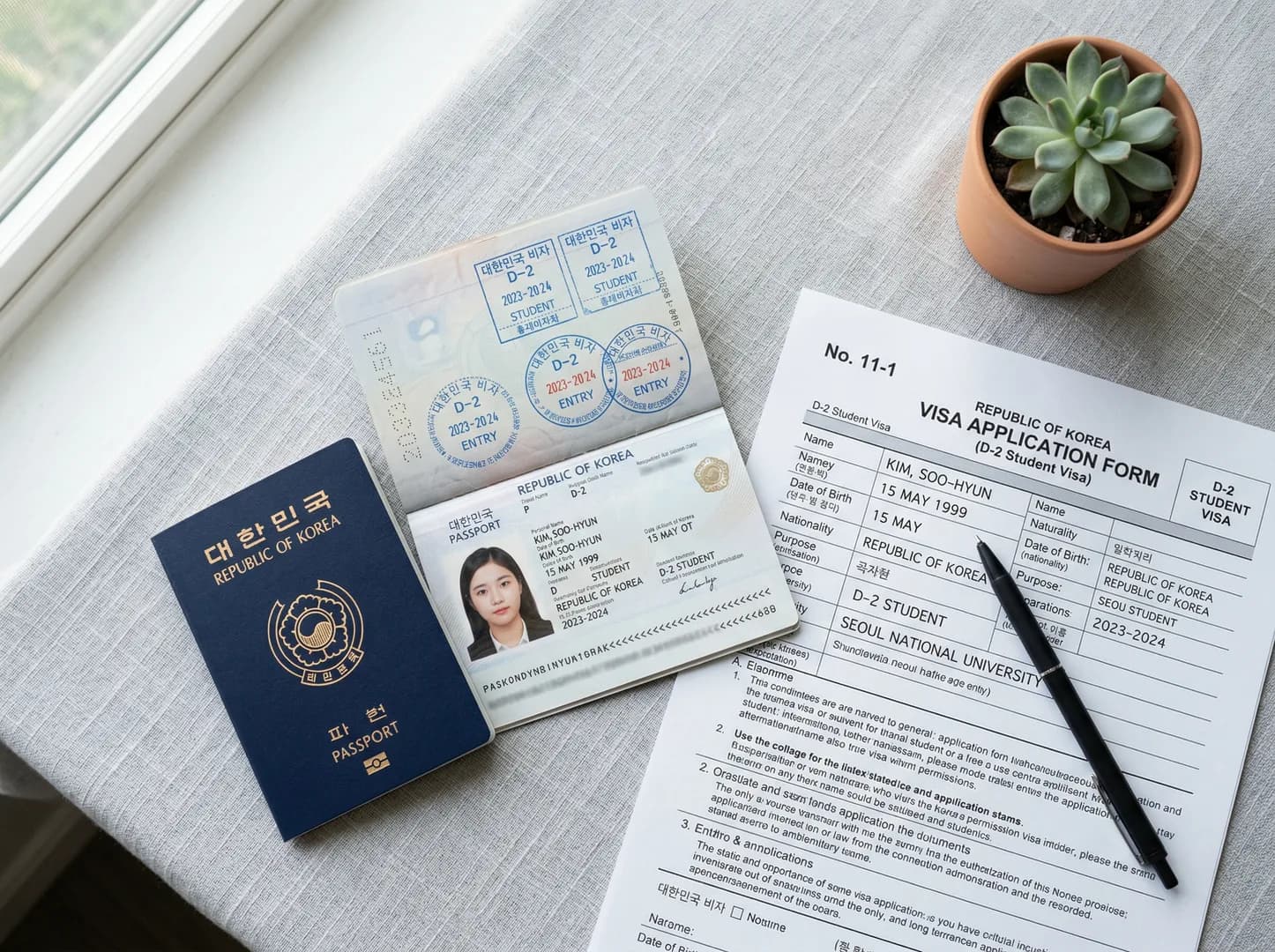
D-2 and D-4 visa timelines, required documents, and common mistakes.

Which universities require TOPIK and at what level — plus prep resources.

Rent, transit, food costs, and campus environments compared across Korea.

Hidden costs, deposit policies, and semester fee structures that international students often overlook.

Work visas for international students, job market overview, and preparation strategies.
FAQ
GKS (Global Korea Scholarship) is funded by the Korean government and covers full tuition, a monthly stipend, and airfare. University-specific scholarships are awarded by individual schools based on grades, nationality, or major, typically covering 30–100% of tuition. The two are often mutually exclusive, so verify eligibility before applying.
Most English-taught programs do not require TOPIK. Instead, they ask for IELTS 5.5–6.5 or TOEFL 80+. However, some universities require TOPIK Level 3 or above as a graduation requirement, so it's important to distinguish between admission and graduation conditions.
D-2 (student) visa holders can apply for part-time work permission after 6 months in Korea. During semesters, you may work up to 20 hours per week; during breaks, there is no hourly limit. D-4 (language training) visa holders are also allowed up to 20 hours per week after 6 months. Some industry restrictions apply.
In Seoul, expect ₩700K–1M/month in a dormitory or ₩1M–1.5M/month renting independently. Cities outside Seoul (Daejeon, Busan, Gwangju, etc.) are 20–30% cheaper. Major expenses break down to housing (30–40%), food (25–30%), transportation (5–10%), and other living costs (15–20%).
Most universities prioritize international students for dormitory placement, but high-demand schools in Seoul may have waitlists. Alternatives include studio apartments (₩400K–600K/month), boarding houses with meals (₩500K–700K/month), or goshiwon (₩300K–500K/month). Check Vijob's city guides to compare housing options by region.
Degree programs require a D-2 visa; language courses require a D-4 visa. Apply at the Korean embassy in your home country after receiving your acceptance letter. Processing takes 2–4 weeks depending on your nationality. We recommend starting document preparation at least 6–8 weeks before your enrollment date.
If you've compared a few universities, it's time to refine your plan with an expert. We help with eligibility checks, documents, scholarships, and visa timing.
Free · 9 languages supported · Personal info protected
Partner with UNIVijob to track your students' application progress directly in the portal and get up-to-date information on partner universities.
Continue
Part-time jobs, daily life tips, career prep — Vijob is with you every step.
Voices
“I was lost on which university to choose, but they recommended one that perfectly matched my grades and budget. They also helped with visa preparation so thoroughly that I got accepted on my first try!”
“I was worried because I couldn't speak Korean well, but they consulted me in Chinese which was so convenient. They also informed me about scholarships in advance, so I could reduce my tuition burden significantly.”
“Document preparation was the hardest part, but thanks to their thorough review, I could apply without any mistakes. Thank you for the kind consultation!”
“It was hard to find information about studying in Korea from Myanmar, but thanks to UNIVijob, I got help from consultation to admission. I sincerely recommend them!”


아잉
3 weeks ago

Ho Ngoc Anh
3 weeks ago

Shruti
3 weeks ago
Compare
Looking isn't enough. You need to compare to truly choose.
| Criteria |  |  |  |
|---|---|---|---|
| Tuition / sem | ₩2,400,000 | ₩4,200,000 | ₩5,100,000 |
| Scholarship | GKS + Univ | Univ Only | GKS + Univ |
| Language | Korean | Korean | English |
| TOPIK Required | Level 4+ | Level 3+ | Not required |
| Dormitory | Available | Available | Waitlist |
| Living Cost / mo | ₩700K–900K | ₩900K–1.2M | ₩1M–1.5M |
| IEQAS Certified | Yes | Yes | Yes |