

Hello everyone! This is Vijob. 👋
Have you ever shouted "Happy New Year!" on January 1st, only to find the entire country buzzing with excitement all over again in late January or February? You might be thinking, "Wait, didn’t we already celebrate the New Year?"
To those looking in from the outside, Korea’s biggest traditional holiday, 설날(Lunar New Year), can seem a bit mysterious. Why do Koreans celebrate the New Year twice? What exactly do they do for fun during this time? Vijob has put together a comprehensive guide on everything you need to know, including essential tips for expats living in Korea!
📅 Why does Korea have two New Years? (Solar vs. Lunar)
This is the most common question we get! The Korean calendar actually marks two different New Year's days:
신정 (Sinjeong - Solar New Year): This is January 1st on the solar calendar. Like the rest of the world, Korea celebrates this day, but it’s usually a quieter holiday spent with friends or partners, often watching the first sunrise of the year.
구정 (Gujeong - Lunar New Year): This is the first day of the lunar calendar—the "true" 설날(Lunar New Year). For Koreans, this is the traditional start of the year.
💡 Vijob’s Insight: In its past as an agrarian society, Korea relied on the lunar cycle to manage farming. Consequently, the first day of the lunar year was historically the true beginning. While Korea uses the solar calendar today, the tradition of celebrating the major holidays according to the lunar calendar remains deeply rooted.
👨👩👧👦 The Great Family Reunion: What does it mean?
설날(Lunar New Year) is more than just a day off; it’s a time to reconnect with one's roots.
The Great Migration: During the holiday, millions of people travel from Seoul back to their provincial hometowns. This mass exodus is called Gwiseong-gil, and it creates a unique spectacle where highways turn into massive parking lots.
차례 (Charye): Early in the morning, families perform a memorial rite by preparing an elaborate table of food to honor their ancestors. It’s a distinct part of Korean Confucian culture—a way of saying, "We exist because of those who came before us."
Family Affection: It’s a precious time for relatives who are usually too busy to see each other to gather, catch up, and share Jeong (a unique Korean sense of deep connection and affection).
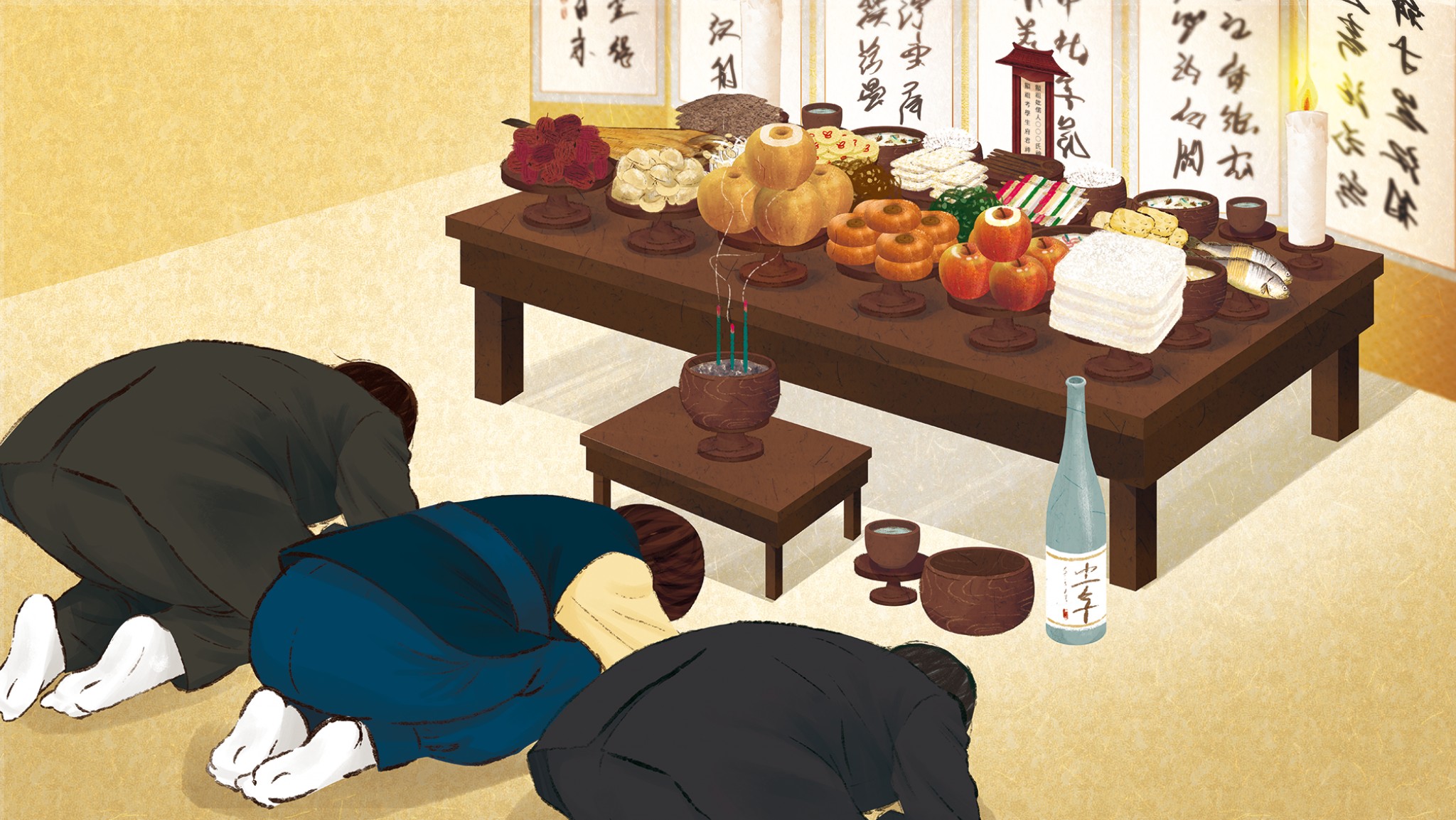
차례
🥣 What’s on the Menu? (Eating your way to a new age!)
The undisputed star of the holiday table is 떡국(Tteokguk - sliced rice cake soup).
Why we eat it: The long, white cylinders of rice cake symbolize longevity and purity. When sliced into rounds, they look like old coins, symbolizing wealth and prosperity ("Become rich!").
A Fun Expression: In Korea, people say you haven't actually aged a year until you've finished a bowl of this soup. A common joke to ask a friend's age is, "How many bowls of 떡국(Tteokguk) have you eaten?"
The Feast: Beyond the soup, tables are packed with 전(Jeon - Korean pancakes), 갈비찜(Galbijjim - braised short ribs), and 잡채(Japchae - stir-fried glass noodles). Be prepared to eat until you're stuffed!
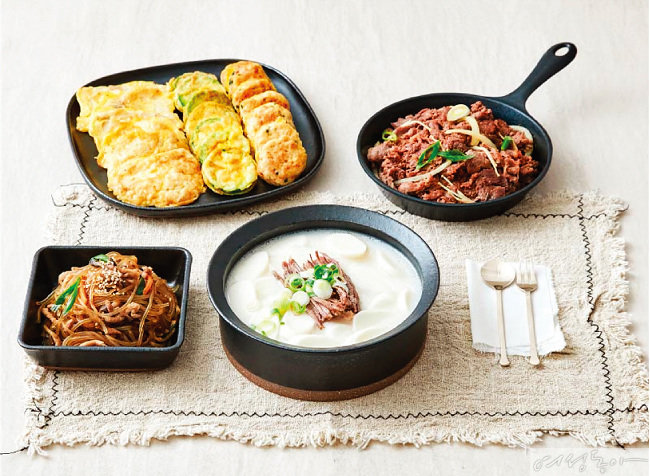
떡국, 전, 갈비찜, 잡채
🙇♂️ The Highlight: Bows and Envelopes
One of the most interesting traditions for international residents is 세배(Sebae).
세배(Sebae): Dressed in traditional Hanbok, the younger generation performs a deep, formal bow to their elders. While bowing, they say, "Saehae bok mani badeuseyo" (Please receive a lot of luck in the New Year!).
세뱃돈 (Sebaetdon): After receiving the bow, the elders offer words of wisdom (blessings) and give the younger ones "New Year’s money" in envelopes. This is exactly why kids count down the days until the holiday! 🧧
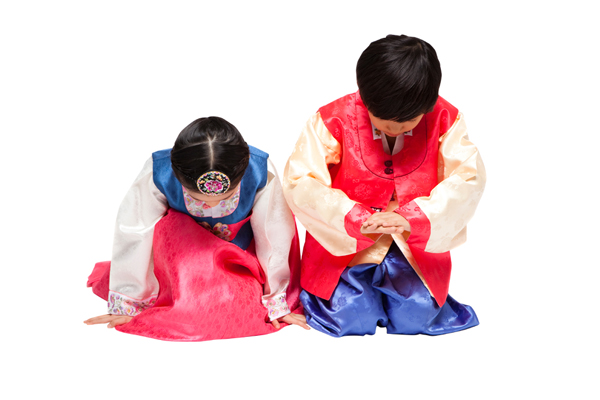
세배
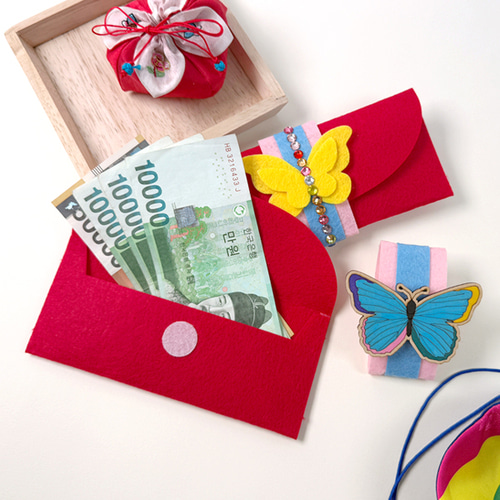
세뱃돈
🎲 Games People Play
After the big feast, families gather to play traditional games.
윷놀이 (Yutnori): This is a board game where you toss four wooden sticks to move your pieces. The rules are simple, but the strategy of capturing opponents' pieces makes it incredibly thrilling. It’s not uncommon to hear a lot of shouting and cheering during a high-stakes match!
Other Activities: You might see kite flying or Jegichagi (traditional hacky sack), though nowadays many families also head out to catch a movie or visit a cafe together.
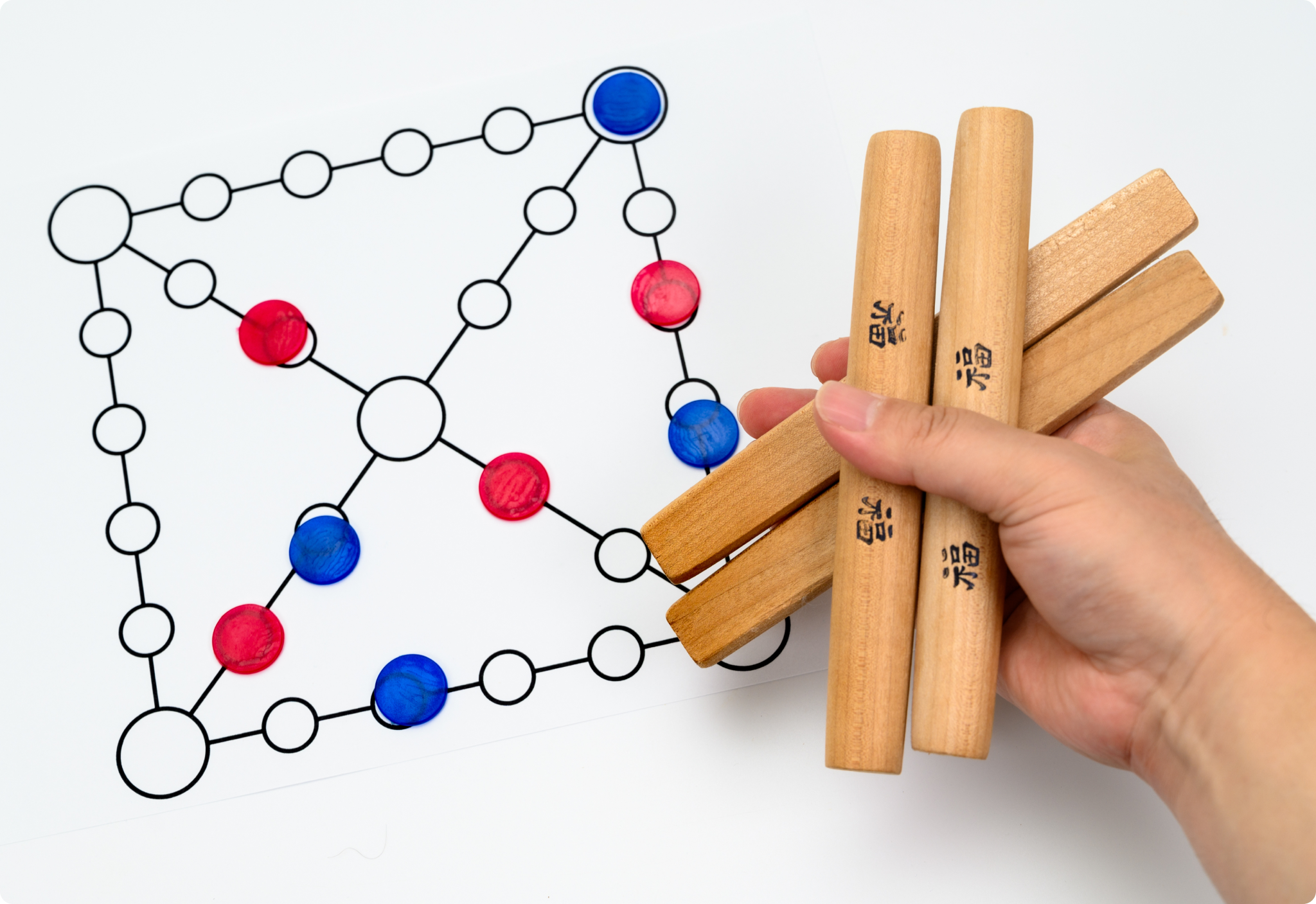
윷놀이
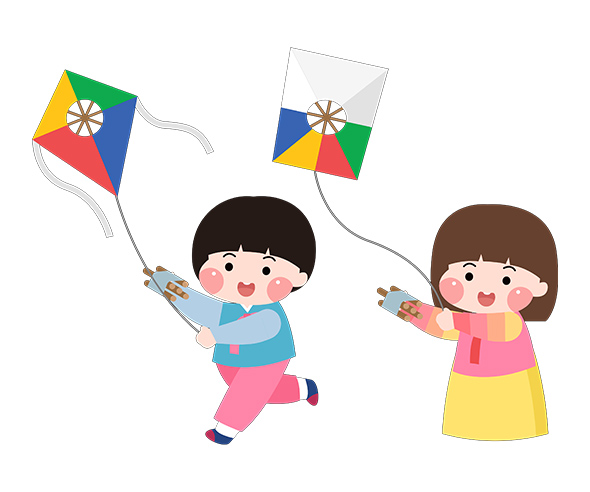
연날리기
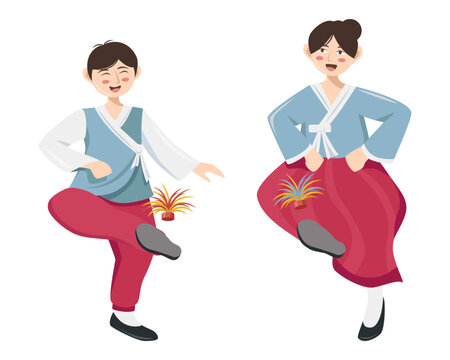
제기차기
📝 Vijob’s Pro-Tips for Expats in Korea!
To make sure you aren't caught off guard during the 3–4 day break, keep these tips in mind! This year (2026), the holiday stretch is extra long—running for 5 days from Saturday, Feb 14th to Wednesday, Feb 18th.
Check Closing Dates (Especially Feb 17th!) 🚫
The Big Day (Feb 17th): Most shops, restaurants, and department stores will be closed on the actual day of 설날(Lunar New Year). Stock up on essentials by Friday, Feb 13th.
Convenience Stores: Luckily, these stay open 24/7.
Hospitals/Pharmacies: Many will close. Prepare basic emergency meds in advance (though ERs remain open 24/7).
Shipping & Delivery Deadlines are NOW! 📦
Online Shopping: Today (Feb 10th) might be your last chance to order. Anything ordered now may not arrive until after the break. Buy urgent items in person at a mart instead.
Food Delivery: Expect delivery times to double during the holiday. Order at least an hour earlier than usual.
Beware of Sold-Out Tickets 🎫
Because this is a 5-day weekend, everyone is traveling. KTX and bus tickets are likely already sold out. If you must travel, keep refreshing the 'KORAIL Talk' or 'Express Bus' apps for cancellations.
Greet Your Korean Friends 💌
Send a quick message to your Korean colleagues or friends. Even if your Korean is a bit shaky, saying "Saehae bok mani badeuseyo" goes a long way. People will truly appreciate the gesture!
설날(Lunar New Year) is more than just a holiday; it’s a warm time for families to become one and wish each other health and happiness. Even if you are far from home, we hope you’ll try a bowl of 떡국(Tteokguk) and feel the warmth of Korean hospitality.
Vijob is always here to root for your successful life in Korea! To everyone, 새해 복 많이 받으세요! 🙇♂️🙇♀️